



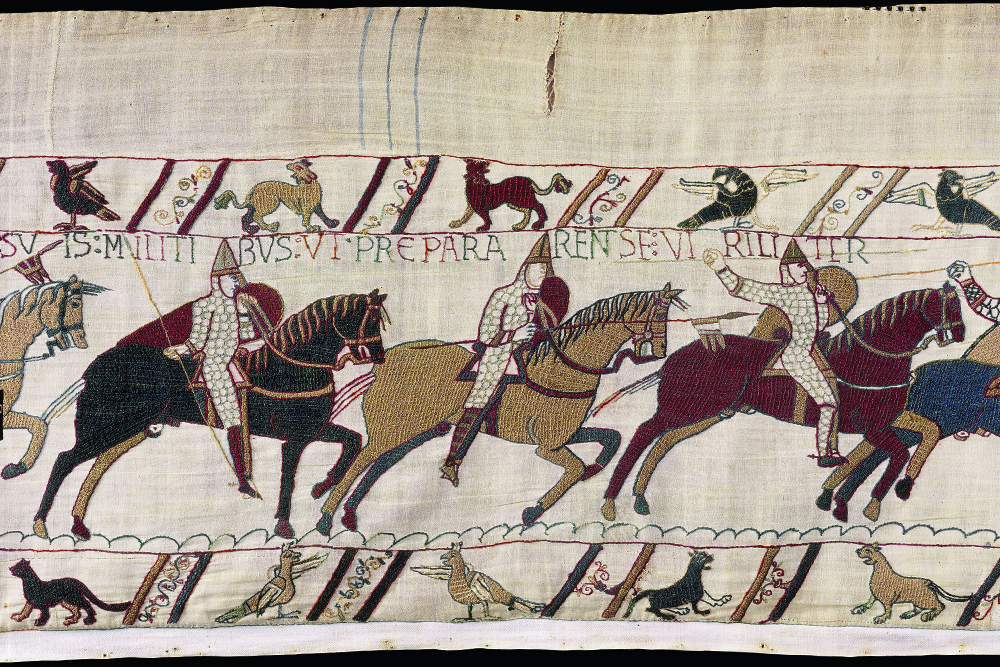
For the first time in 1,000 years the Bayeux tapestry will be displayed in the UK. This 70-metre-long tapestry has major cultural significance, depicting the events that took place in the build up to the Battle of Hastings and the Norman Conquest in 1066.
This date is extremely important to English history, marking the last time a successful invasion took place as well as the shift in the English monarchy as a new dynasty and new laws and customs were created.
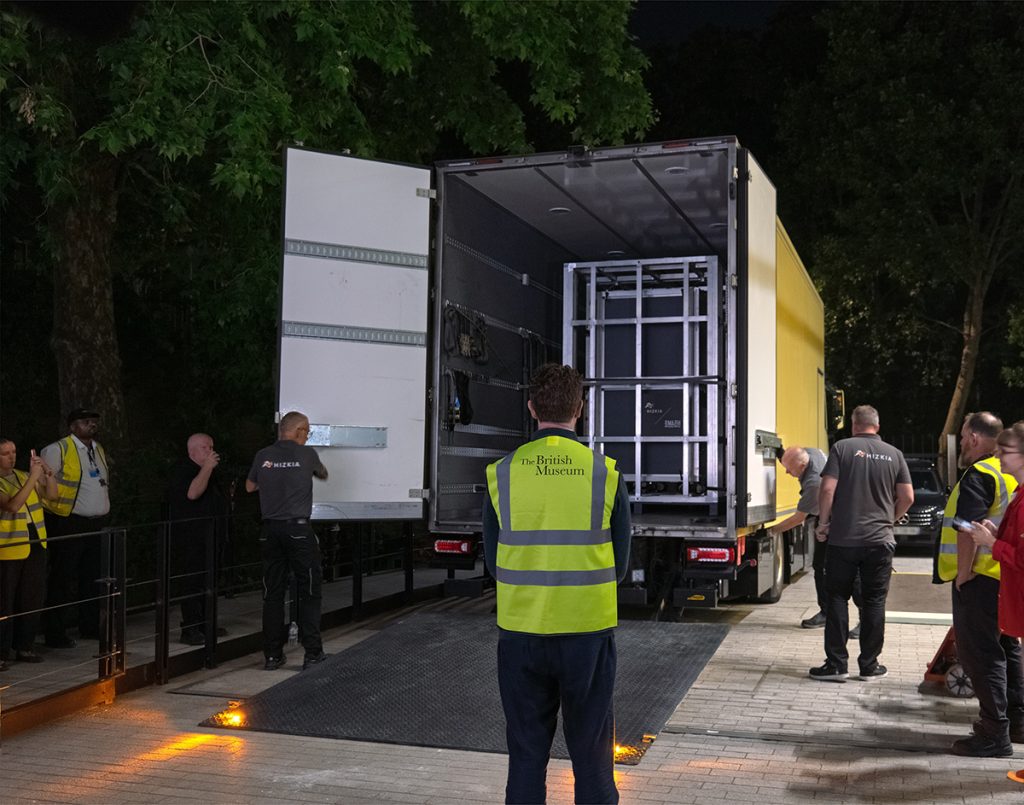
The Bayeux Tapestry Arrival © Trustees of the British Museum
The tapestry arrived in London at dead of night, after two dry runs had been completed. To say that caution was being taken is an understatement.
From a conservators perspective the movement of any tapestry can be intimidating, let alone a 70-metre-long mediaeval tapestry that is arguably the most acknowledged and influential piece of mediaeval art in existence.
At Plowden & Smith we have not been directly involved in the move but, like much of the conservation community, we have been following the story closely. After discussing with one of our textiles conservators, we see their opinion on the Tapestry being transported back to the UK:
When people hear that the Bayeux Tapestry is being moved, the instinct is to worry, and that is not unreasonable. A textile of that age is not just old, it is tired. It has lived a long life, it has been rolled, unrolled, displayed, stored, repaired, and handled more times than anyone would like.
At the same time, travel is not automatically reckless.
It depends on the planning, the handling, and the display conditions, and on whether the host institution has the right technical skill and the discipline to follow the plan. If the tapestry is going anywhere, the British Museum is one of the places that does have the conservation experience, the infrastructure, and the systems to do it properly.
What protection measures are likely to be in place?
The first thing to understand is that for an object like this, the move is treated as a conservation project in its own right, not as a simple loan.
The tapestry would be fully assessed and documented before anything starts, including detailed condition mapping, high resolution photography, and careful checking of known weak areas, edges, previous repairs, distortions, splits, and any signs of strain.
That baseline matters, because it means everyone involved can track even very small changes, and react quickly if something begins to move or sag.
Handling and packing are where most of the risk sits, so the method is usually about controlling the tapestry’s shape and weight at every moment.
The safest approach is typically a rigid support system, so the textile is not asked to support itself. That can mean a purpose built support, or a controlled rolling system with large diameter rollers and protective interleaving, depending on how the tapestry is currently mounted and what its condition allows.
Either way, the aim is the same, no sharp bends, no point loading, no dragging, no unsupported spans, and no improvisation. Handling is slow, rehearsed, and done by a small trained team, with the sequence planned in advance.
During transport, environmental stability is a priority. The crate and internal packing are designed to protect against vibration, shock, and fluctuations in temperature and humidity. Courier oversight is normal for a loan of this significance, with agreed checks at key points, including on arrival, before unpacking, and after installation.
Once on display, light and physical support become the main long term concerns. You would expect low light levels, very low UV, stable temperature and humidity, and a display method that supports the textile continuously, so it does not sag under its own weight. For a long embroidered textile, the mounting and the distribution of load are critical. The British Museum will also manage visitor proximity, airflow, and dust, because even small, everyday gallery factors add up over months. In practice, this usually means a sealed or semi sealed display environment, careful filtration, and strict housekeeping in the casework and gallery.
One point that is easy to miss in public debate is that having the tapestry properly looked at can do a lot of good.
A major loan forces a level of examination, documentation, and cross checking that is often hard to resource in normal museum life. It can bring hidden issues into view, like areas under tension, old repairs that are no longer doing their job, subtle distortions, weak seams, or areas where the support system needs rethinking. Done well, it is a chance to identify problems early, and deal with them in a professional, properly recorded way, rather than waiting until something becomes a display emergency.
That does not mean there is no risk, there is always risk when you move a fragile textile, especially one of this scale and age. What matters is whether the risk is being reduced to the lowest practical level through planning, proper support, environmental control, and experienced hands. If those conditions are met, the tapestry can be displayed safely, and the public can see it without the object being pushed beyond what it can tolerate.
Without a doubt, the British Museum will go above and beyond to ensure the tapestry is carefully cared for while it is in their custody.
We are also genuinely grateful for the opportunity to see a one of a kind work of extraordinary historical, technical, and artistic importance. For many of us, it will be a once in a lifetime chance.
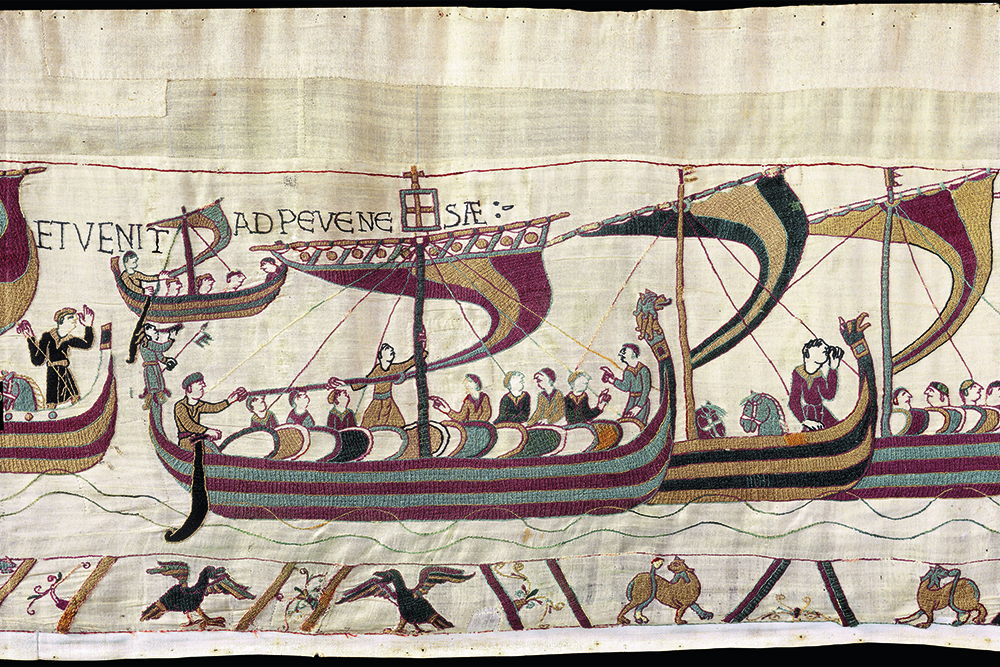
Bayeux Tapestry © Bayeux Museum
Record Ticket Sales for the Bayeux Tapestry Exhibition
On the 1st of July a new record was created for ticket sales at the British Museum in London. More than 80,000 people joined queues to grab tickets in hopes of being able to see the extraordinary Bayeux tapestry and hundreds of thousands attempted to gain access to the Museum’s website. It’s clear, even after one day of sales, just how popular this tapestry is. Experts predict the British Museum will welcome up to 7.5 million visitors during the tapestry’s stay, showing the pure excitement people have to see this mediaeval artefact. However, please do not worry if you were unable to secure tickets or missed the date, as the museum plans to release more in October 2026 and January 2027. All of our conservators believe the opportunity of seeing something with such great historical and artistic depth should not be passed up and truly recommend you attempt to get tickets.